Showing posts with label Union Terminal. Show all posts

SUMMERAIL AT UNION TERMINAL

For the past 18 years during the second weekend of August, Cincinnati Railroad Club hosts Summerail at Union Terminal. Railroad fanatics from around the country travel to Cincinnati to learn stories about trains from across the United States and the world, both modern and historic. The night before the kickoff, guests have the opportunity to attend traditional talking slideshows (1970s classroom-style) and do some trainspotting as they watch the rails from Tower A. With only 300 seats available for the grand event, tickets for Summerail are highly sought after and sell out months in advance.


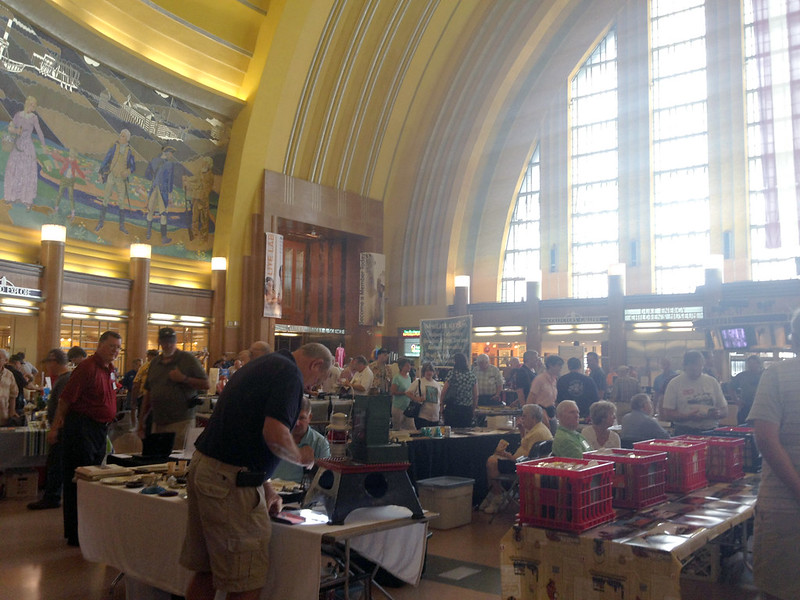
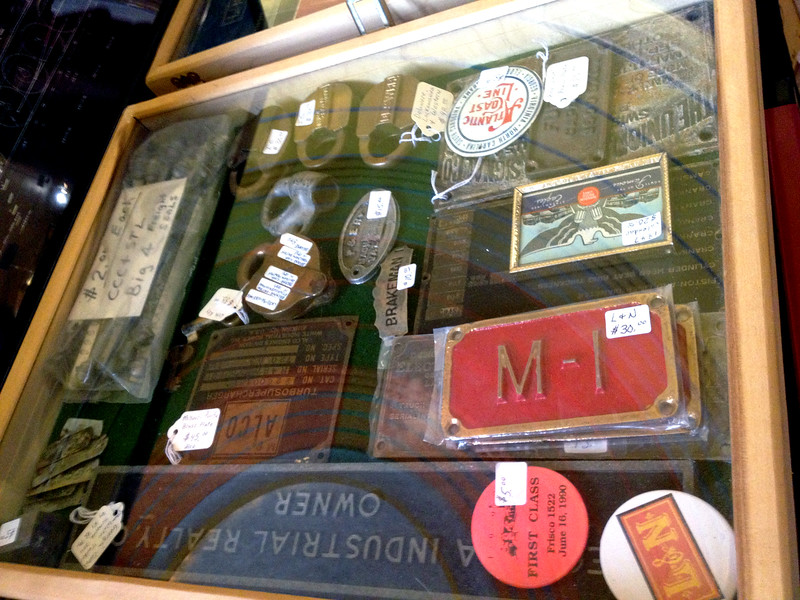
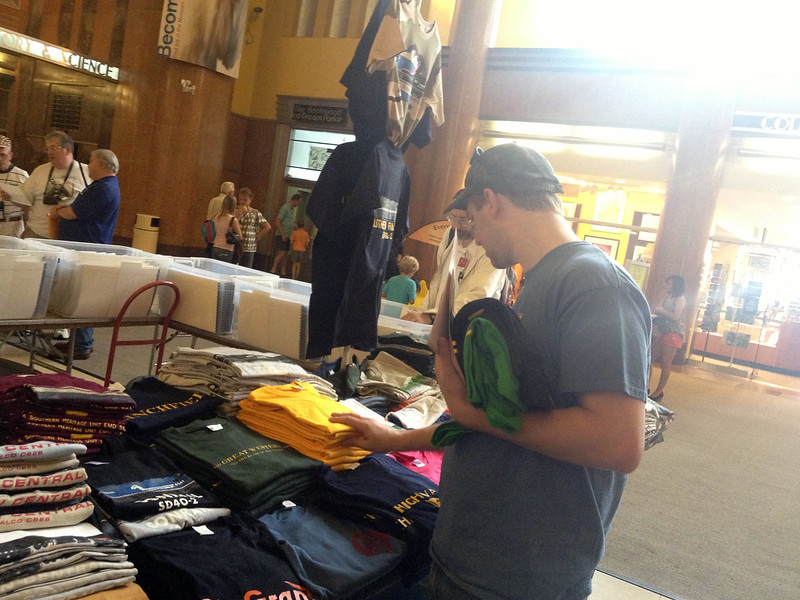
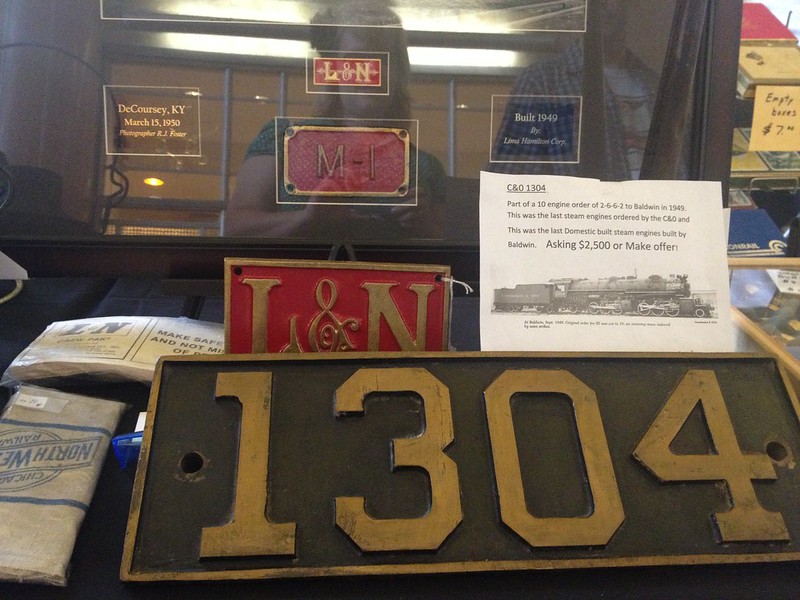
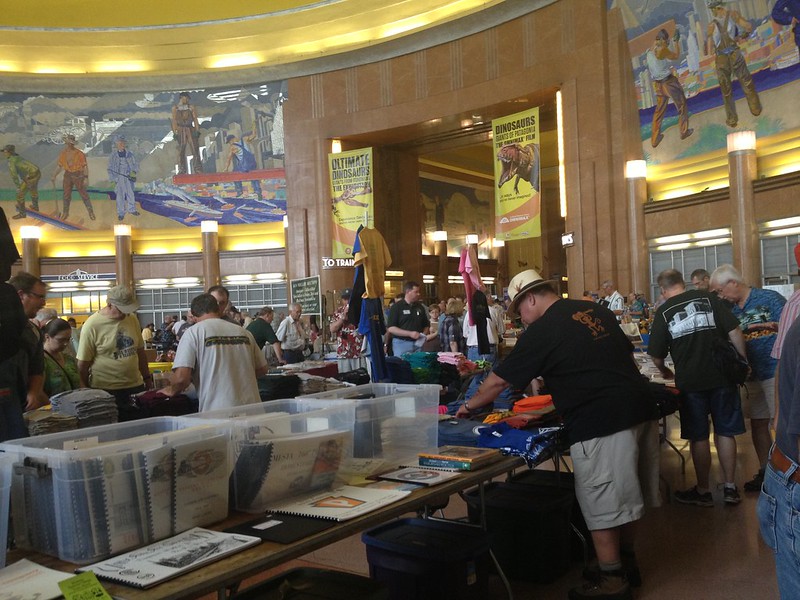
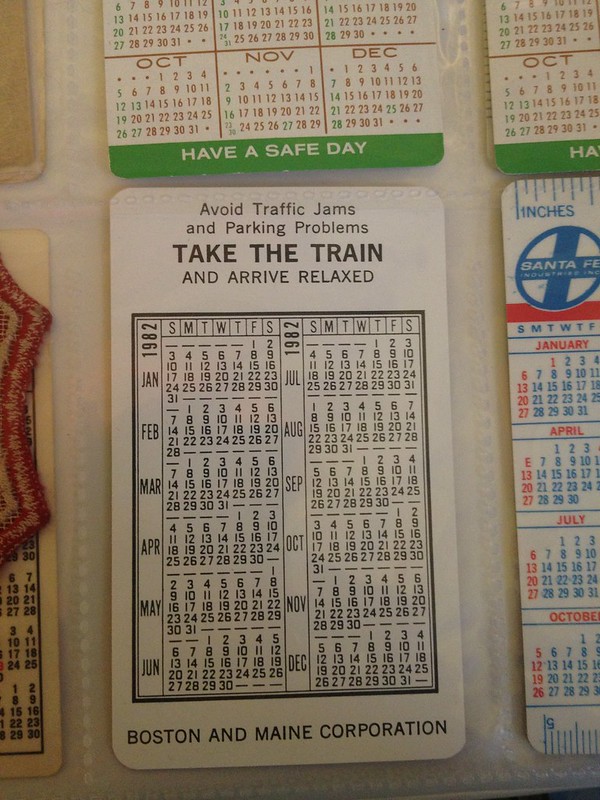
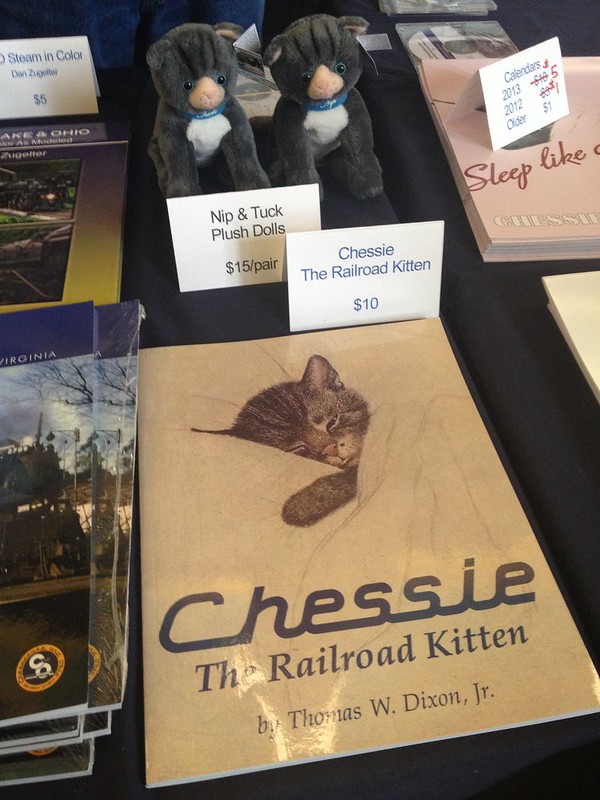
Saturday is the official celebration of Summerail, which includes multimedia storytelling over the course of eight hours. Union Terminal's rotunda transforms into a pop-up store, the Railroad Show & Sale. Dozens of vendors and historical societies from around the region bring out their wares for collectors to purchase. There's a little bit of everything for sale at every price range: tee shirts, DVDs, books, magazines, model trains, postcards, antiques, and more. I snatched up this book about Chessie the Railroad Kitten, a mascot of the brilliant advertising campaign for the Chesapeake and Ohio Railway. 


Railroad Show & Sale in the rotunda


See the reflection of the rotunda in the glass?


Loading up on a new wardrobe.


A selection of ten 30-minute presentations are shown throughout Summerail with breaks between every two sets. Each program takes viewers on a different journey to another era or another country. This year's features included rail narratives from Glacier National Park, Appalachia, Hokkaido, Japan, a cross-country trip in the 1970s, a cross-country trip in the early 1950s photographed in color, and more.
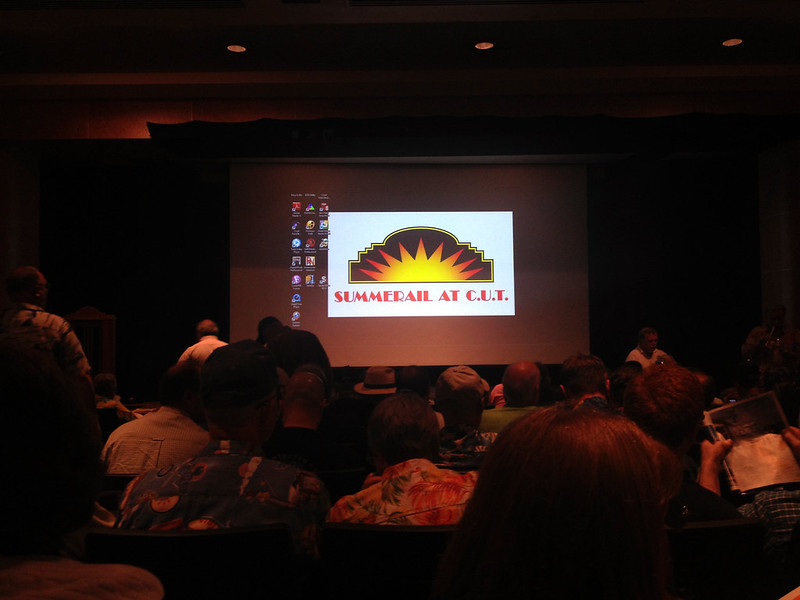


My favorite of the lot was Lessons From Hokkaido, which told the story of Japan's backcountry, as observed by Americans who moved there to teach English as a second language. The eye-opening tale of the Hokkaido Rust Belt showed how the area was dependent on coal and manufacturing jobs. It also discussed the importance of small neighborhood trains in transporting the working class. Opportunities dwindled when rail lines were cut back, isolating the blue-collared folks from commuting to other parts of the region. This little-known story is far from what the average American imagines what life is like in Japan; a lifestyle that is very similar to that of Appalachians.
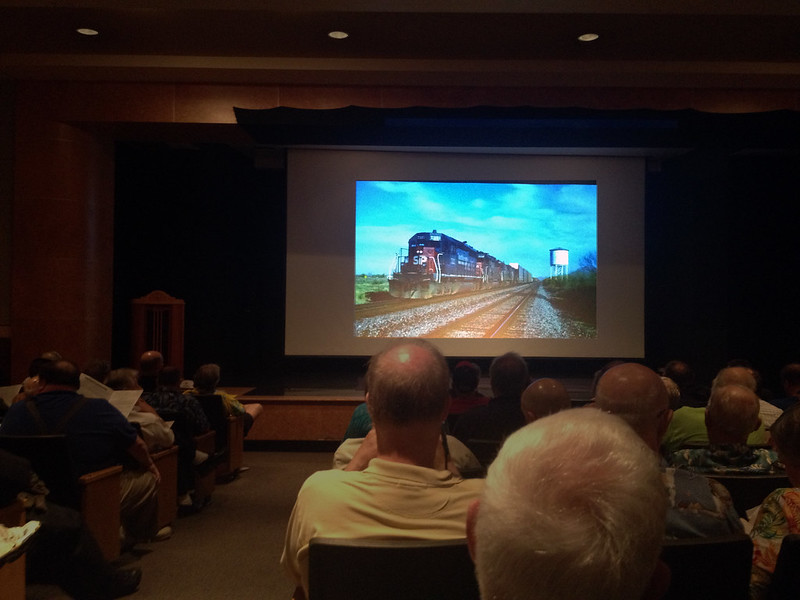


I was equally impressed with a presentation entitled "Why My Friends Just Call Me The Godfather." John Dziobko, Jr. began his collection of railroad photography in 1948. In 1950, he began shooting on Kodachrome, which allowed him to take some of the first color photographs. Now 80 years old, John has begun digitizing his life's work and sharing it online: over 500,000 color slides.

As a techie, I had some doubts about the quality of the old images I would see. Not with the Godfather. The pictures are cinematic quality, perfectly preserved and not pixelated. Each image was of a breathtaking view of both scenery and trains. Most impressive was being able to see people and architecture of the early 1950s in color. Ever seen a color photograph of President Truman? The Godfather has one. Publicized materials of the day were typically black and white; Summerail was my first time seeing a vibrant photo collection from the era.


Regardless if you're a hardcore rail fan, hobbyist, or simply someone who likes to watch travel documentaries, Summerail provides unique entertainment that will transport you around the globe in a matter of hours and leaves you thirsting for your own next adventure.

DEAD SEA SCROLLS AT CINCINNATI MUSEUM CENTER

With rain predicted for the entire weekend, it's perfect weather to check out Cincinnati Museum Center's latest exhibit: Dead Sea Scrolls.

Discovered in 1947 by a sheep herder, the Dead Sea Scrolls were found preserved in clay pots inside a cave located near the First Temple in Jerusalem. A total of 972 scrolls were hidden some 2,000 years ago during the time period when Romans conquered Jerusalem. The scrolls are believed to be the earliest existing documents of the Old Testament.

Projection of Dead Sea Scrolls and the clay pot they were found in.

Visitors enter the exhibit to be immersed in a dark room with illuminated quotes and a short reading from the Torah. Next, they step foot into a room in which every wall is a movie screen, projecting a 360º motion picture of the Dead Sea region. Guests are then greeted by a live storyteller dressed in archaeological attire, who summarizes the Dead Sea Scrolls and other artifacts on display.


Around the corner, we began traveling along a glowing timeline taking us from present date to the time of the scrolls, 2,000 years ago. With each step, Middle Eastern artifacts were displayed in a case at eye-level from inkwells, scales and weights, to a miniature Prometheus figurine dating back to 70 A.D.

Historic mail and inkwells
Jewelry and Prometheus figurine (right)
Bronze Prometheus figurine 70 A.D.
Scales and weights

The adjoining room featured a collection of clay pots from 1200 - 1000 B.C. I was intrigued by the digital devices inside the climate controlled casings, keeping the artifacts preserved at a precise 20º Celsius and at 50% humidity.

Terracotta bathtub found in the sacred town of Dan, from 9 B.C.


Once we reached the room with the scrolls, photography was not permitted for preservation purposes. If you enjoyed the pictured artifacts thus far, you will be in awe of what is shown in the Scrolls' Room:

  • Bronze plaque of the Menorah from 325-638 A.D.
  • Mosaics from 661-750 A.D.
  • Linen found in the Qumran Cave from 1 A.D.
  • Comb and sandals from 1 A.D.
  • Walnuts and Pomegranates from 1 A.D.

Entering the Dead Sea Scrolls room.

With several aisles of displays to see, most dating back to the year 1 A.D., I was impressed and amazed at how well these items had been preserved through time - and sitting in a cave nonetheless! Most importantly, I enjoyed how the Museum Center's descriptive placards had an equal balance of history and facts in addition to the religious perspective.

Clay jar that held some of the Dead Sea Scrolls, from 100 B.C. - 70 A.D.


The exhibit includes an audio interview from 1947 of the merchant that purchased the scrolls from the shepherd: Kahlil Kando. He unearthed ten clay pots in a cave filled with scriptures, then sold them to the merchant for $100 a piece. Researchers were presented with the scrolls and returned to the site to uncover the rest of the documents scatted throughout 11 caves. The most scrolls were recovered from Cave #4.

Another 2,000 year old clay pot that held the Dead Sea Scrolls.

There is also a live camera feed from the Western Wall in Jerusalem, as well as a large piece of the wall. This spot is considered holy as it is where the First and Second Temples once stood before the Roman invasion. In the same area, several ossuaries were found in a tomb and have inscriptions that included the names "Jesus," "Mary," and "Joseph." Placards by the display discussed how while some believe that the tomb belonged to Jesus Christ, these names were actually very common in the Second Temple period.


Aerial of Qumran Cave, where the scrolls were found.

Cool Things I Learned:

  • The discovery of the Dead Sea Scrolls provided an explanation for the world having more than one religion. These texts showed that there were many ways of understanding Abraham, not just one. For example, the Quran contains the same history as the Old Testament. 
  • The Dead Sea Scrolls' "Daniel" excerpt is the scripture closest in origin to the Old Testament. It was written in 50 B.C., one hundred years after the composition of the original, which has never been discovered.
  • The greatest number of scrolls feature excerpts from Psalms which includes 40 manuscripts and 51 individual Psalms written by King David. However, the text does not correspond with the Bible scripture.

For more fun:
Try to spot the man on screen awkwardly wander into the shot of Jerusalem in the 360º movie room.
Hint: He'll be on a screen on the left.


Whether you're a history buff, spiritually faithful, science-minded, or simply looking to experience something new, the Dead Sea Scrolls exhibit will be the most captivating two hours of your weekend.

HOLIDAY JUNCTION AT UNION TERMINAL

Nothing says "holiday spirit" better than visiting a massive train display. Cincinnati's legendary Duke Energy Holiday Trains made the move to Holiday Junction at Cincinnati Museum Center last year, and have returned bigger and better for 2012.


The historic train display began in 1946 in partnership with the Baltimore & Ohio Railroad. Cincinnati's collection is one of the largest portable models in the world, measuring 36.5 by 47.5 feet long and consists of over 300 miniature rail cars, 60 engines, and 1,000 feet of track.


The models are built-to-scale, and are traveling at actual speed for their size; an equivalent of 60 mph.


New to Holiday Juction is the observation tower: a platform structure allowing guests to watch the model train village from above.


"Brrr! I hope Duke Energy gets the power back on quick!"

In addition to the trains, Holiday Junction includes an extensive exhibit: Toys Through Time. From board games, dolls, and mechanical toys, guests can reminisce about unwrapping their favorite childhood Christmas toy from the 19th and 20th centuries. A sample of the items on display feature original Star Wars figures, a first-edition Monopoly set, historic Goldsmith dolls, and the innovative Tinker Toys.


During the visit, I had the privilege of meeting Jack Thompson, one of the original train masters from 1946. I remember watching him when I was a little girl as he conducted the trains in their former Downtown location. Today, he's often found in the Holiday Junction workshop repairing the motors on broken trains from the exhibit. Armed with pliers and a soldering iron, Jack has kept the trains chugging along for over 50 years.


Transporting a repaired rail car back onto the Holiday Junction tracks.
The original operating controls from 1946.
Inside the original operating control board. Jack mentioned that making repairs were difficult.
Inside the 2012 operating control board. Much more organized!


A Cincinnati tradition for folks of all ages, Holiday Junction is the perfect spot to relive your youth or start a new holiday memory. The best part - it's FREE through December 24! Visit this website to claim your ticket voucher:  https://www.holidaytraindisplay.com


Holiday Junction runs through January 6, 2013.
Mon - Thurs: 10:00am - 5:00pm
Fri - Saturday: 10:00am - 8:00pm
Sunday: 11:00am - 6:00pm